Every year, before the season starts, season predictions pour out of every local and national media outlet, every blogger, and pretty much everyone you run into on the street. I’m here to tell you that they all suck. Too often, they lean too heavily on the previous season, they say “regression to the mean” way too much, and they almost all fall into the trap of “Last Year + Roster Changes = This Year.” But worst of all, they give you one scenario. They boil it down to one number, one prediction, one opinion. They all acknowledge that it’s way too early, no one knows anything for sure, and then they tell you the one exact thing they think will happen and how they know it for sure. And they’re surprised when they get yelled at in the comments. So here’s my idea. I’ll give you a range of possibilities for the different pieces of this Lions team. I’ll explore the worst case and the best case. I’ll try to paint you a picture in broad strokes…And then I’ll tell you exactly what will happen and how right I am. This will be my Kool-Aid Scale. If I’m too close to 10, it’ll prove I’m a slappy drinking the Kool-Aid. Here goes nothing.

Offensive Line
Best Case: This is the position group that I’m most adamant about changing the narrative for. Two years ago was the best case scenario. According to Football Outsiders, they were ranked 13th in run blocking and 2nd in pass blocking. Warford and Waddle had come in as rookies and completely solidified the right side of the line. Going into last season, they were considered one of the strongest units on the team. Last year, they kept the exact same line and retained Jeremiah Washburn as offensive line coach. That continuity seemed sure to give them the same sort of dominant line they showed in 2013. But this is what I was talking about with “Last year + roster changes = this year.” Things aren’t always so simple. And as you probably know, the O-line was a major disappointment. According to that same Football Outsiders ranking, they ranked 21st in both pass blocking and run blocking. So what happened? Last season, the Lions changed their protections a little bit. They tried to become more technical and clean up the finer points of the blocking scheme to further improve over their impressive 2013 performance.
“We tried to focus on a bunch of stuff at once, down to the smallest detail,” Warford said. “And with offensive line play, I mean, that’s cool. But at the end of the day, you have to whoop somebody’s ass. You know?”
The changes didn’t work. The blocking was rife with missed assignments and miscommunication. So this year, the line is going back to the basics. This can only mean good things. So this is my best case. Last year was a fluke that has been identified and corrected. The aging and much maligned Raiola and Rob Sims have been replaced with high draft picks in laken tomlinson and travis swanson, not to mention the continued development of the other young guys in reiff, warford, waddle, and cornelias lucas. This line is now built from high draft picks that are both young and huge. I don’t consider it too much of a stretch for this line to be top 10 in the NFL. Of course, the pass blocking has always seemed to be stronger than the run blocking, but that fits this team well.
Worst Case: On the other end of the spectrum, maybe this whole story has been wishful thinking for me to craft a narrative where there isn’t one. Maybe Loe Lombardi is trying to fit square pegs into round holes on this o-line. The talent is undeniable, but line play is all about communication. The loss of Raiola could sting because it’s not easy to replace the amount of experience that guy has. He’s been the starting center since I was in the 6th grade and I’m about to finish my PhD. I don’t see the line being any worse than last year, but in a worst case scenario, the switch at center does nothing to help the line communication.
My Prediction: On a scale of 1 to 10 from the worst case scenario to the best case, my guess would be about a 7. I think the blocking simplification will bring the line closer to 2013 form, but it is a different OC than it was that year and losing Raiola, despite how happy it made the fans, will have short term negative consequences. I feel like most other people are pegging the o-line to be around a 3 on this scale and I think that’s way too bearish.
Quarterbacks
Best Case: The best case for Lions quarterbacks is that Kellen Moore is gone, which has already happened. Yaaaaaay! But seriously, the best case is that Stafford takes a big step forward in his second year under Joe Lombardi. He has had a full season and a full offseason to get comfotable in the offense and it should lead to much better comfort guiding this team. In my best case, this looks like Matt Stafford being just outside the elite QBs. I don’t think he’ll reach the level of Aaron Rodgers, Peyton Manning, Tom Brady, Drew Brees, or Andrew Luck. But in this scenario, he’s right behind them.

I didn’t even have to photoshop this one.
Worst Case: Even in the worst case, I can’t imagine Stafford taking a step back. All of his supporting cast should be more talented and he’s had more time in this system. And last year, he was still pretty good. He had a 60.3 % completion percentage, 22 TDs and 12 INTs. That’s good for a QB rating of 85.7. Even in the worst case, he probably adds a few ticks to his completion percentage, increases his touchdowns, and decreases his interceptions.
My Prediction: This is a much narrower band than for the offensive line, but I’m still picking towards the high end of this with an 8. I see Matt Stafford completely blowing away his doubters and putting in performances capable of carrying this team the way elite quarterbacks typically do. But he’ll do it with better offensive personnel and a better defense than many of them, so it’ll carry this team far.
Running Backs
Best Case: The best case scenario for the RBs is that Ameer Abdullah comes in and provides the same spark that we saw from Jahvid Best and Reggie Bush while they were still able to contribute. Joique Bell settles into his usual role of steady load-carrying running back, and Theo Riddick carves out a consistent niche as a pass-catching back like Reggie Bush’s first few years in New Orleans.
Worst Case: The worst case is that Joique Bell’s injury lingers (or doesn’t) and he never gets rolling. He’s been a part of a few really terrible backfields and while the fans like him, I get the feeling that he’ll be one of those guys that we look back on and say, “I can’t believe we ever relied on THAT guy.” For a few examples, check out Maurice Morris, Kevin Smith, TJ Duckett, Tatum Bell, I could go on for a while. In a worst case, Abdullah hits a few big gainers, but doesn’t provide a consistent rushing threat and Theo Riddick fades into obscurity, Ryan Broyles style.
My Prediction: My prediction would lay fairly low on this scale at a 3. I’m pretty sure Joique Bell isn’t going to provide anything positive going forward and the expectations for Abdullah are way too high for a rookie. I think Ameer will probably end up halfway between the best and worst case, but that’s not enough to carry the full load. Theo won’t do much more or less than in previous years, leading to another disappointing year on the ground for the Lions.
Wide Receivers & Tight Ends
Best Case: I’ll just go ahead and group these together to talk about their combined effect on the passing game. In the best case, Calvin Johnson doesn’t lose a step or show his age at all and continues to be the best receiver in football. Golden Tate replicates his performances for the Lions last year and this preseason and they both stay healthy. Eric Ebron emerges as the third receiver and touchdown dancer we’ve always dreamed of and guys like TJ Jones, Lane Moore, and Corey Fuller act as capable role players in working the middle of the field and in the deep passing game. Pettigrew keeps on blocking or whatever non-drop related thing he can do.
Worst Case: Calvin Johnson starts to slip, proving that he is indeed human. His speed drops a notch and he continues to deal with nagging injuries. Golden Tate can’t get open as the sole receiving option because teams realize he’s actually really good. Ebron takes a step forward, but is still just at the level of decent receiving tight end rather than becoming one of the big receiving threats like Jimmy Graham or Antonio Gates. He refuses to dance when scoring touchdowns. Once again, no one emerges as the third receiver and Pettigrew is forced to try and contribute in the passing game, failing in his usual ways.
My Prediction: My prediction for this category would be 7. I think Tate will become the leading receiver on the Lions, eclipsing CJ as the most feared threat on the team. CJ will take a slight step back because he can’t stay the best forever, but he’ll still prove to be a big threat when healthy. Ebron will take a decent step forward in his second year, but he won’t be the second coming of Jimmy Graham, because no one is. The other receivers will be the Lions same unproductive riff raff they usually are. Overall, still a really good receiving corps, but not as invincible as they might seem.
Defensive Line
Best Case: Fairley was pretty bad anyway. Let’s stop talking about that guy. He was never healthy or motivated and there was a reason the Lions didn’t pick up his option. 31 other teams have gotten by without a DT as good as Suh for years, but probably 20 teams get by without a DT as good as Haloti Ngata, so the Lions will be just fine. Even in the best case scenario, no one can replace Suh, but I’m inclined to believe that Ngata, Walker, and Reid are all better then Fairley. This unit will be solid, although unspectacular. Ziggy Ansah turns into one of the best pass rushers in football and becomes the dominant force the Lions could use with Suh gone. Jason Jones and Devin Taylor prove that they can man the other DE spot effectively and the d-line acts as a solid foundation with star power from Ziggy. The line won’t be as good as it was last year, but it doesn’t have to be. Most aren’t.
Worst Case: In the worst case scenario, Ngata’s age starts to show and neither Tyrunn Walker or Caraun Reid prove to be capable starters, and while Ziggy is really good, he’s double teamed constantly. Jason Jones and Devin Taylor prove to be more mediocre than solid and the run defense becomes porous once again.
My Prediction: My prediction for this unit comes in at a 5. The unit will be pretty solid, but unspectacular, as are many defensive lines. The Lions were never going to completely replace Suh and they never needed to. Ziggy will be very good, but probably not a game changer all on his own and Ngata will be better than people are expecting, but more of a force in the run game than a pass rusher. Half of the other guys will be decent and half won’t.
Linebackers
Best Case: In the best case scenario, Jeremy Reisman of Pride of Detroit returns his DeAndre Levy jersey and a miracle of modern medicine occurs. Levy returns to health as the stalwart linebacker he was last year. Tulloch continues to suck at coverage, but does just fine as a run stopper and occasional pass rusher. Tahir Whitehead steps in when the Lions aren’t in nickle and shows that he has progressed to full time starter level. Reports of Kyle Van Noy’s bust status turn out to be overblown and he provides the impact, big play ability the Lions envisioned when they drafted him in the 2nd round.
Worst Case: Jeremy Reisman buys a second DeAndre Levy jersey, doubling down on his jersey curse. DeAndre Levy contracts a career-ending infectious disease while in the hospital and spreads it to the rest of the team. Matt Stafford and Dan Orlovsky fall ill and the Lions are forced to trade their next 3 first round picks (RG3 style) for Kellen Moore. Boise State lunatic supporters are proven right as Kellen Moore leads a decimated Lions team to their first Super Bowl ever. Joey Harrington, Steve Mariucci, and Matt Millen are the announcers for the game.
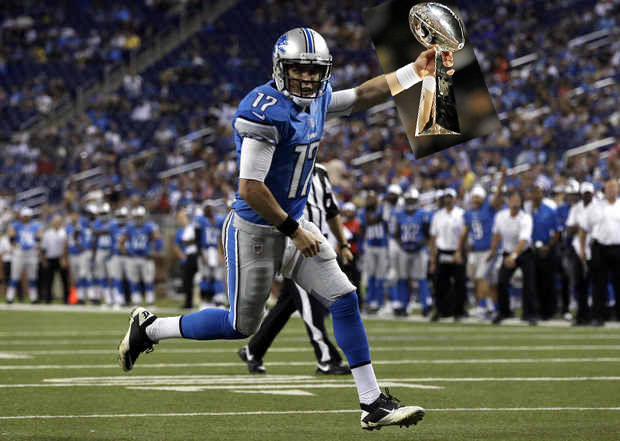
My Prediction: Just given the severity of the bad in the worst case scenario, I’m going to have to give this a 9.5. Levy will be back in like 2 weeks and the rest of the linebacking corps is insignificant by comparison. Van Noy will be decent and Tulloch and Whitehead will both be pretty good.
Secondary
Best Case: The best case is that Darius Slay continues to be one of the best young corners in football and adds some game-changing interceptions to the mix. Glover Quin continues to be one of the best safeties in the game and locks down the deep passing game. Rashean Mathis and James Ihedigbo snub father time and Nevin Lawson finally nails down the slot corner role the Lions have been trying to fill for the past decade.
Worst Case: The carriage finally turns into a pumpkin for Rashean Mathis and his age shows. Nevin Lawson does well in the slot, but doesn’t have what it takes to fill in on the outside and the Lions are forced to cover up both a weakened defensive line and an aging secondary.
My Prediction: My prediction for this unit will lie around a 6. I’m hopeful, but not expecting that Mathis will be able to keep it up completely. He won’t be a disaster, but things will be tougher without the pass rush the Lions had last year. Lawson will do well in the slot corner role and shut down some of those routes over the middle that so many teams love to run.
Special Teams
Best Case: Sam Martin is a constant. In the best case, Matt Prater defies his critics and returns to the prime form he showed in Denver as one of the best kickers in the league. My fantasy football team name of Praters Gonna Prate is fully justified. TJ Jones or Ameer Abdullah provide a spark in the return game. Don Muhlbach continues to be Don Muhlbach.
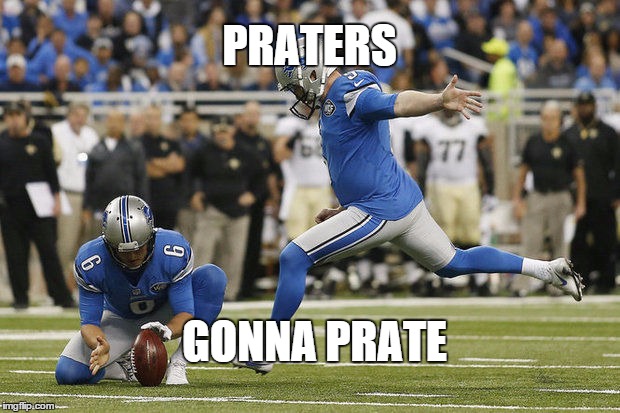
Worst Case: Prater’s missed extra point in the preseason is a sign of things to come. Still, nothing can be as bad as last year. Even in the worst case, the kicker won’t lose the Lions a handful of games. Once again, no one provides a whole lot in the return game, but what else is new. Don Muhlbach continues to be Don Muhlbach.
My Prediction: My prediction will be a 7. Prater and Martin will be really good, but no one will provide much in the return game. Don Muhlbach will continue to be Don Muhlbach.
Division Opponents
Best Case: In the best case, the Packers sorely miss Jordy Nelson. He’s one of the best receivers in the league, despite Aaron Rodgers getting all of the credit. Rodgers is still very good, but with a mediocre supporting cast, he can only will the team so far. They only achieve a record of around 10-6. The emergence of the Vikings is overblown. Rookie QBs are always overrated and Teddy Bridgewater joins the club of Vince Young, Colin Kaepernick, RG3, Mark Sanchez, Sam Bradford, and many others that had a breakout rookie year and then maintained a stunning level of mediocrity for years to come. The Bears are awful.
Worst Case: It’s almost as if the Packers didn’t notice that Jordy Nelson had ever existed. Aaron Rodgers is incredible regardless of who plays with or against him. He wills an otherwise crap team to a 12-4 record and a playoff run. Teddy Bridgewater continues to develop and joins Colin Kaepernick in the Ron Jaworski inevitable hall of fame. The Vikings magically overtake the Lions in the division. The Bears are awful.
My Prediction: My prediction lies at a solid 10. Aaron Rodgers is really good, but not good enough to pull 12-4 out of that team. The Vikings hype train has passed the Theo Riddick hype train and they’re both heading towards the same station. The Bears are awful.
Season Prediction
Best Case: The Lions offense takes a big stride forward in the second year under Joe Lombardi. While the defense takes a small step back, they’re still ranked just outside of the top 10. The Lions roll to an 11-5 record, win at Lambeau, and take the division title. The Lions get a first round bye and win their 2nd, 3rd, and 4th playoff games since 1957. Matt Stafford hoists the Lombardi trophy. Headlines are written about Joe Lombardi’s relation to Vince Lombardi.
Worst Case Scenario: The defense takes a sizeable step back and the offense still doesn’t quite click. DeAndre Levy’s infectious disease decimates the roster and Kellen Moore leads the Lions to a wildcard game and their 2nd, 3rd, 4th, and 5th playoff wins since 1957. Kellen Moore hoists the Lombardi trophy. Headlines are written about Kellen Moore’s relationship with Gisele Bündchen, as she leaves Tom Brady for the new golden boy quarterback of the NFL. Kellen Moore signs 10 year endorsement deal with Kraft macaroni and many bad puns are made about his noodle arm.
My Prediction: My prediction is either a 7 or a 0. Either the Lions do pretty well and fight the Packers for the division crown or somehow Kellen Moore wins the Super Bowl and steals Gisele from Tom Brady.


 Holy Schwartz!